Damp wall at the bottom: checks to make before choosing a solution
May 13, 2026
Saltpetre on walls: why it returns and how to act in the right order
May 13, 2026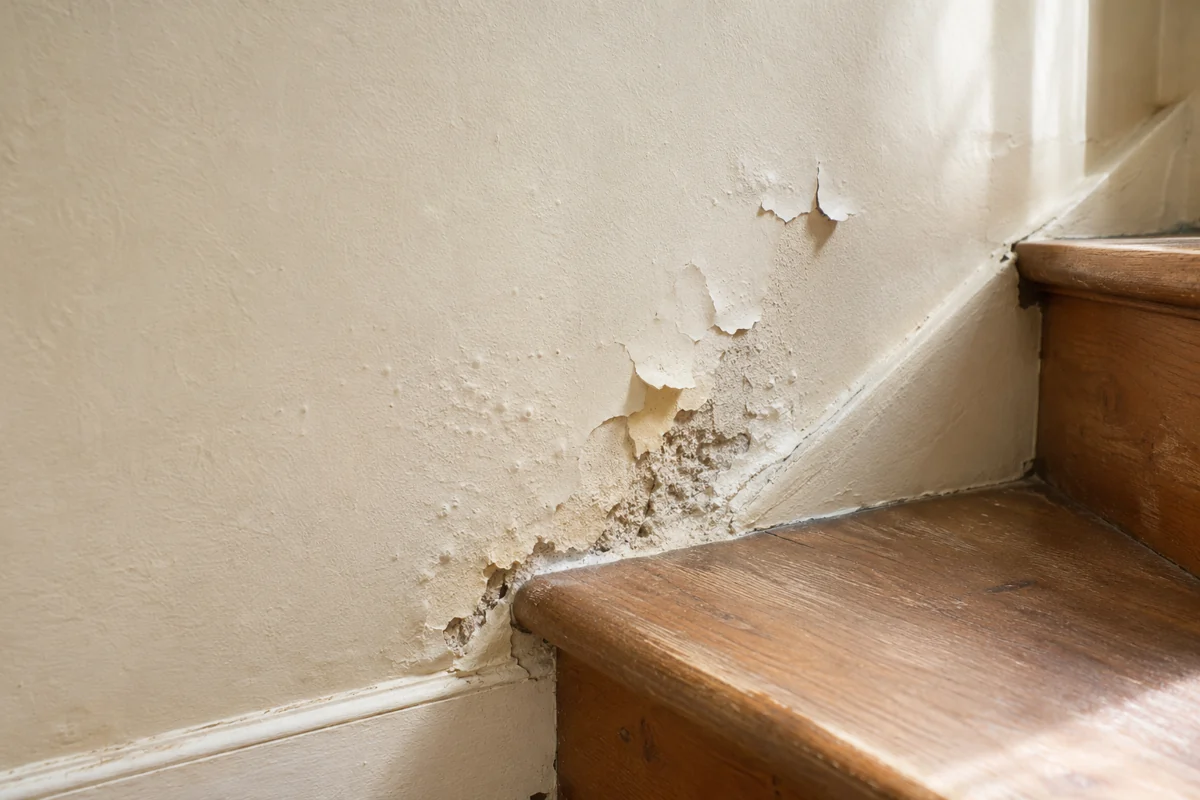
Blistering paint can indicate a damp substrate, salts or poor adhesion: check the wall and the cause before repainting.
With blistering paint on wall, the aim is not to hide marks, but to understand the signs before taking action.
Identify the cause before painting
Blistering paint is not only an aesthetic defect. It often shows that water or vapour is pushing the coating away from inside the surface. Therefore, repainting without analysis may reproduce the same issue.
Do not trap moisture
Avoid overly closed paints, unsuitable fillers or quick repairs on a wall that is still damp. These solutions may look clean at first, but they can block evaporation.
Prepare the surface in the right order
Remove loose parts, let the wall breathe and monitor changes. If blisters return, the cause is still active. In that case, the wall should be understood before any finish.
Choose the right time to repaint
Finishing should happen when the wall has truly improved. In addition, a product compatible with the surface helps avoid creating a new waterproof barrier.
Key takeaway
However, caution remains essential: solutions related to rising damp do not treat leaks, water infiltration, flooding or condensation alone.
Unsure between several solutions? The Help Humidité website offers an online choice guide to help orient your search according to visible symptoms, the home layout and installation constraints.
Continue with the right guide
Monitor wall drying before applying finishes.
Rising damp has been confirmed and you want to choose a Humidistop device? Compare the models, coverage and installation requirements in the Help Humidité shop: ATE and ATG devices, specifications and prices.