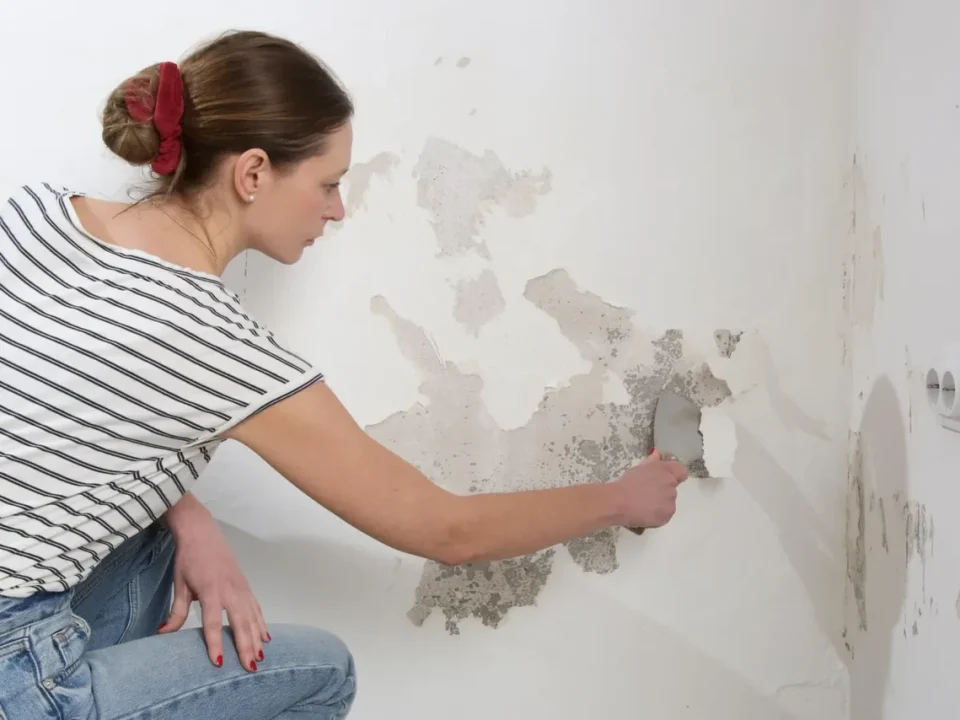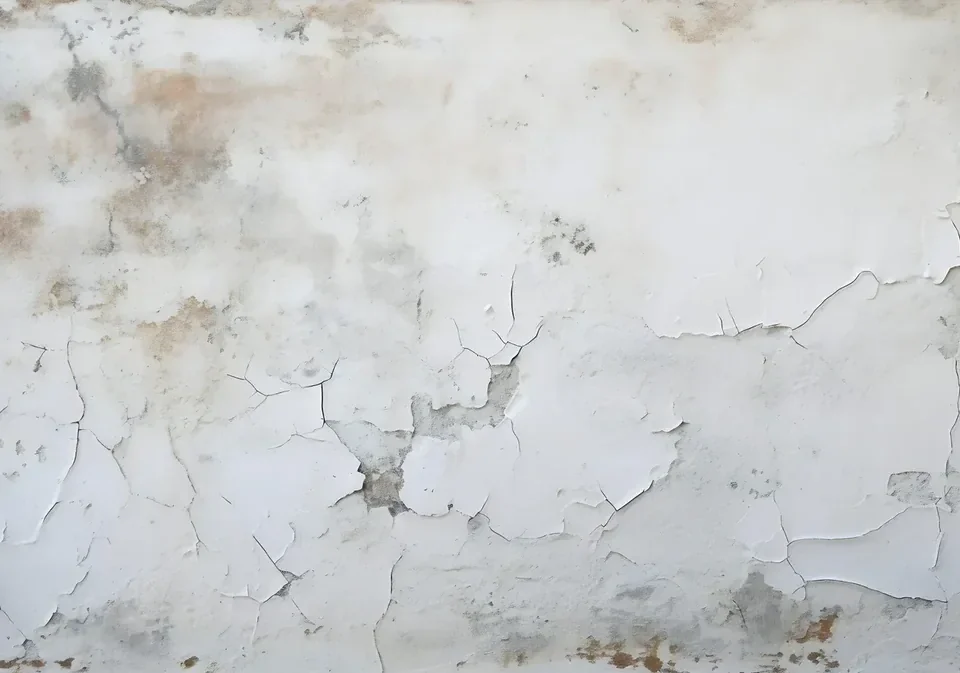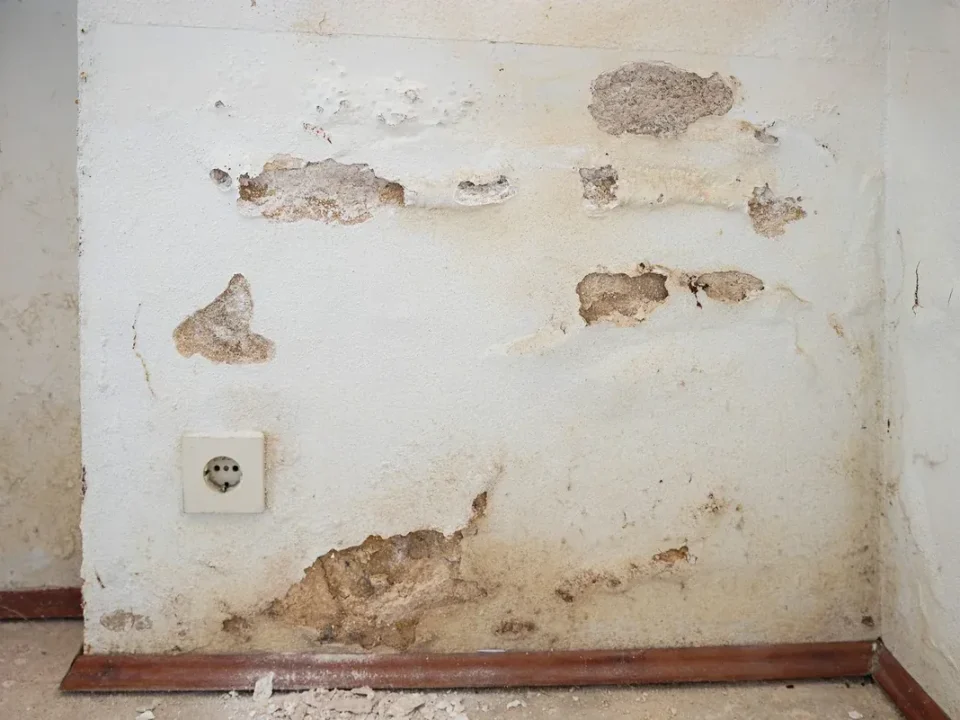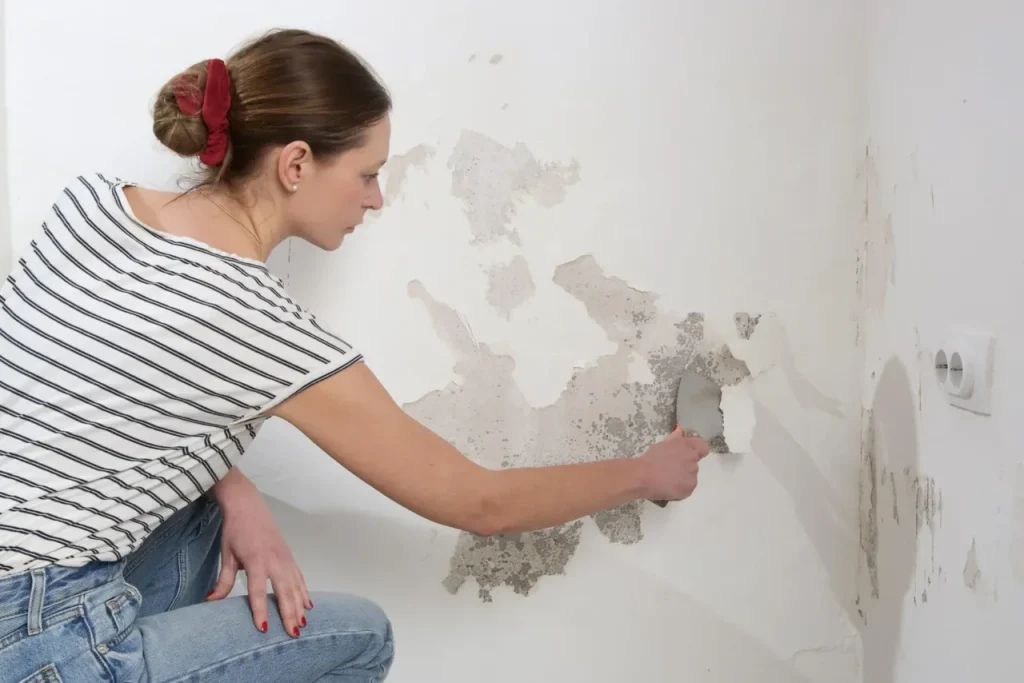
A stain after rain? The 7 photos that help a damp inspection
October 24, 2026
The wall looks dry, but white salts return: what to check
October 24, 2026
You move a wardrobe and find a dark patch, although the rest of the room looks fine. That difference deserves a closer look. The furniture’s position is useful information, but it does not explain the cause on its own.
Describe the affected area first
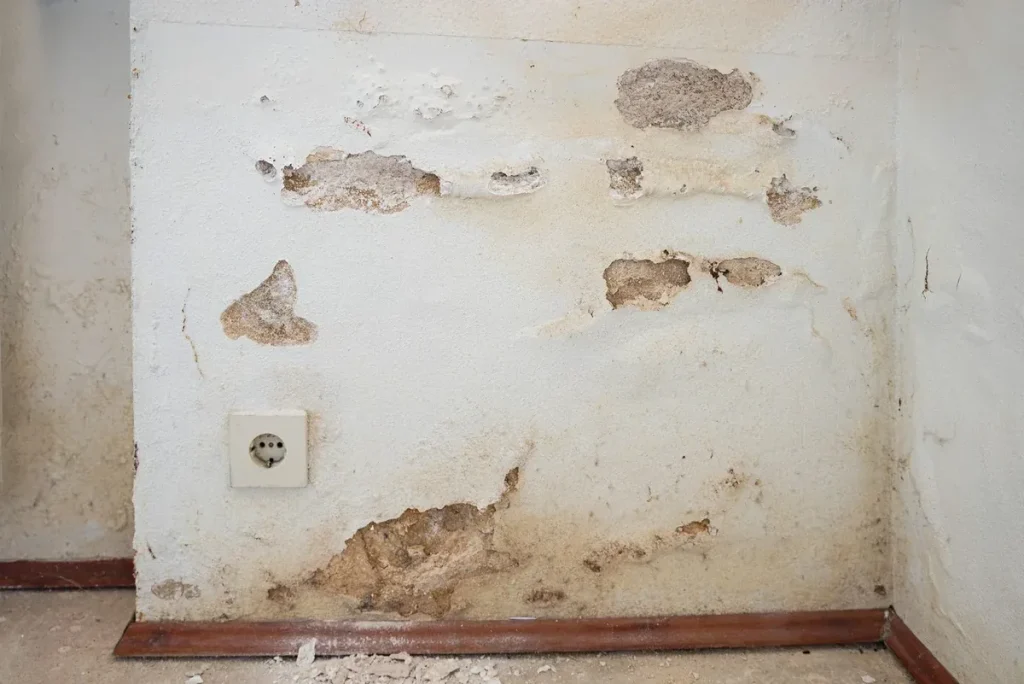
Photograph the wall before doing any work. Note whether the mark is in a corner, on an external wall, near floor level or close to a pipe. Inspect the back of the furniture and consider what is on the other side of the wall.
If you can move the wardrobe safely, leave room to observe the surface. Make sure its new position does not cover an air inlet or ventilation grille.
Investigate three possibilities separately
- A cold wall and limited air movement behind the furniture.
- A nearby plumbing leak or water ingress.
- Moisture within the masonry that needs further assessment.
Compare other walls and record room humidity at different times. One photograph or one meter reading cannot distinguish all these possibilities.
Avoid choosing a treatment too early
ADEME advises identifying the source of mould and maintaining ventilation. Covering the area with paint is not a diagnosis. If the patch spreads or returns, seek an assessment suited to the condition of the home.
ATE and ATG devices are offered for rising damp. They do not replace ventilation improvements or leak repairs. Keep that distinction in mind when comparing the options for your building.
Reference source : ADEME.